
Someone in Cork types "emergency plumber near me" into their phone. They look at the map, scan a few reviews and ring one of the top three businesses. They rarely scroll any further.
That moment is what local SEO is about. If your business is not one of those top results, the call goes to a competitor. The good news is that you can influence where you appear, and many of the most effective steps are practical and affordable.
Why Local SEO Matters for Irish Businesses
Local SEO is the work of making your business easier to find in location-based searches, both in Google Search and on Google Maps. It covers your Google Business Profile, your website, your reviews and the way your business details appear across the web.
For businesses in Ireland, it matters for a simple reason: most customers are local. A plumber in Limerick, a dentist in Galway or a café in Waterford does not need traffic from the whole country. They need the right people within a few kilometres.
Google's own documentation says local results are based mainly on relevance, distance and prominence. In plain terms, Google looks at how well your profile matches the search, how close you are to the searcher, and how well known your business is. You cannot change distance, but you can improve relevance and prominence, and that is where local SEO Ireland campaigns do their work.
One honest note: nobody can guarantee a number one spot on Google Maps. Rankings shift by searcher location, device and competition. What you can do is build a strong, accurate and trustworthy presence, and give yourself a better chance of being seen.
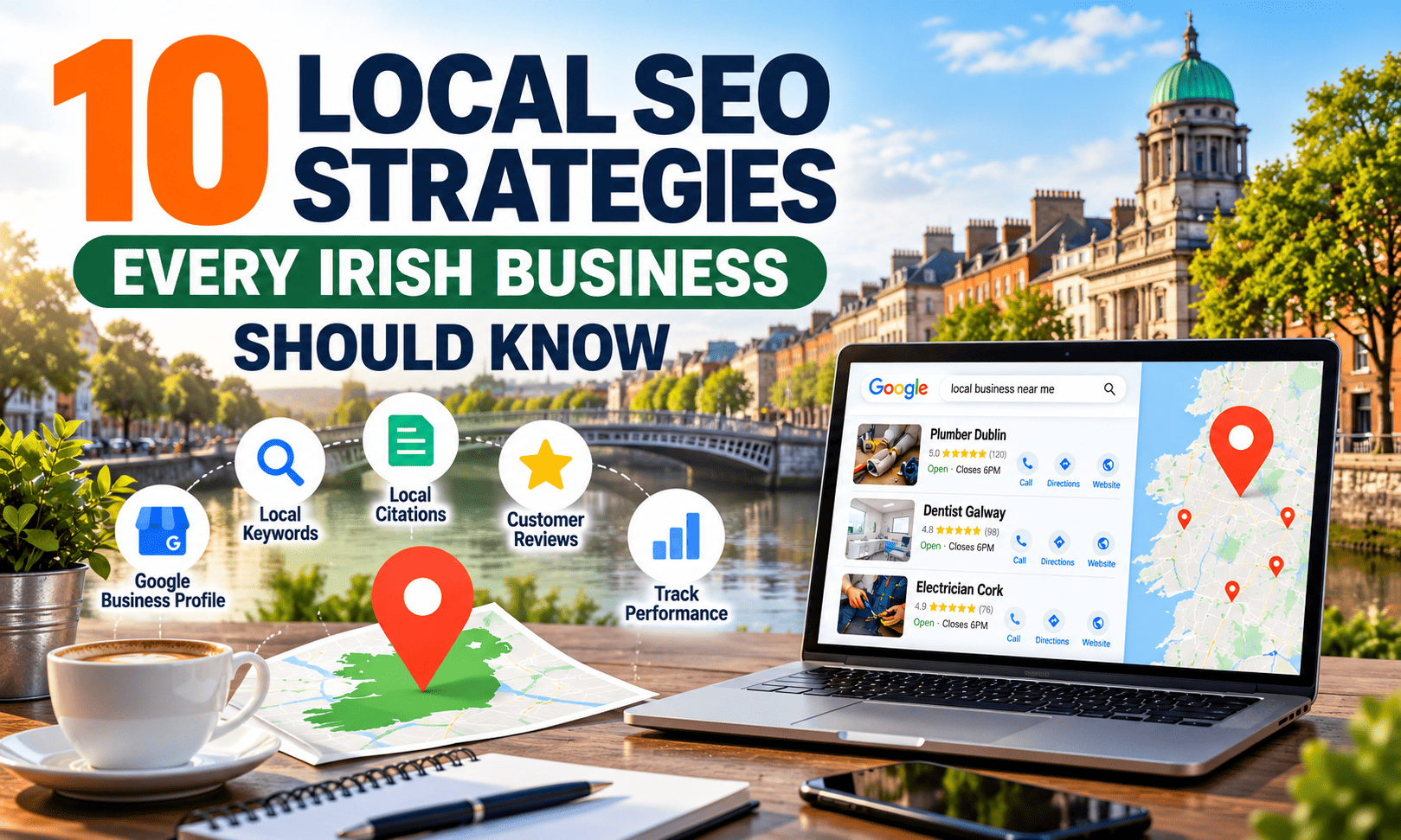
10 Local SEO Strategies Every Irish Business Should Know
1. Optimise Your Google Business Profile
Your Google Business Profile is the foundation of Google Maps SEO. Claim it, verify it, then fill in every section properly.
- Choose the most accurate primary business category
- Write a clear business description in plain language
- List your services
- Keep opening hours up to date, including bank holidays
- Add real photos of your premises, team and work
- Set service areas if you travel to customers
Use your real business name only. Adding keywords to the name or creating fake locations breaks Google's guidelines and can get your profile suspended.
2. Target Local and High-Intent Keywords
Think about how customers actually search. Most local searches combine a service, a place and an intention: "electrician Cork", "dentist Galway" or "solicitor Limerick". Phrases like "near me" and "open now" are common too.
Pick a handful of priority searches per service rather than chasing everything. A small roofing company in Wexford is better off focusing on roofing searches in its own area than competing for broad, national terms.
3. Keep Your Business Information Consistent
Your name, address and phone number (known as NAP) should match everywhere: your website, Google profile, social pages and directories. Even small differences, like "Street" versus "St." or an old phone number, create confusion for both customers and search engines. NAP consistency supports trust and helps Google confirm your details are correct.
4. Build Useful Local Service Pages
Each main service deserves its own page that explains what you do, who it is for, how it works and what customers can expect. If you serve several areas, create a location page only where you genuinely operate and have something useful to say.
Do not copy one page and swap "Dublin" for "Cork". Thin, repetitive pages add little value and rarely perform well. Mention real details instead: areas you cover, typical jobs, local projects and common questions.
5. Earn Genuine Customer Reviews
Reviews influence both rankings and decisions. Ask happy customers for a review shortly after the job is done, and make it easy by sharing your direct review link. Reply to every review, positive or negative, in a calm and professional tone.
Never buy reviews, write your own or offer rewards for positive ones. Google can remove them, and customers can usually spot them.
6. Improve Your Google Maps Visibility
Google Maps visibility comes from the combined effect of everything else on this list: a complete profile, relevant categories, strong reviews, accurate details and a website that backs it all up.
Small habits help too. Post updates and offers, add new photos regularly, answer questions on your profile and keep your information fresh. Activity shows customers that your business is open and cared for.
7. Build Relevant Local Citations
Citations are mentions of your business on other websites, such as Irish directories, chambers of commerce, industry bodies and local listings. Quality matters more than quantity. A few accurate, relevant listings are worth more than hundreds of random ones.
8. Earn Quality Local Backlinks
Links from respected local websites show that others trust your business. Realistic sources include local newspapers, charity events you sponsor, supplier or partner websites, business associations and community groups. Avoid buying links in bulk, as this can cause long-term damage.
9. Create Helpful Local Content
Content works best when it answers real questions. A heating engineer might explain boiler servicing costs in Irish homes. A solicitor could outline the steps in buying a first home. A restaurant might share a guide to events in its town.
Helpful content builds trust, targets useful local keywords and gives people a reason to choose you.
10. Track Local SEO Performance
If you cannot measure it, you cannot improve it. Keep an eye on:
- Calls, direction requests and website clicks from your Google Business Profile
- Enquiries and form submissions
- Local keyword positions
- Review numbers and ratings
- Organic traffic to key pages
Review the numbers monthly. Look for trends, not daily ups and downs.
Common Local SEO Mistakes to Avoid
Most local SEO problems come from a handful of repeated errors:
- Inconsistent contact details across directories and your website
- Choosing the wrong Google Business Profile category
- Ignoring reviews, or never asking for them
- Creating thin location pages with copied text
- Keyword stuffing the business name or page content
- Neglecting basic technical SEO, such as slow loading, poor mobile layout or broken pages
- Expecting overnight results
Local SEO is steady work. Most businesses see gradual progress over a few months rather than a sudden jump, and quick-fix tactics tend to cause problems later.
When Should an Irish Business Consider an SEO Agency?
Plenty of business owners can handle the basics themselves, particularly a Google Business Profile, a few directory listings and a review routine. You do not need an agency to get started.
But it may be worth speaking to an SEO agency Ireland businesses trust if:
- You do not have the time to manage it consistently
- Competition in your town or sector is strong
- Your website has technical SEO problems you cannot fix
- Your Google Maps visibility is poor despite your efforts
- Your citations are messy or inconsistent
- You lack local content and do not know where to begin
- You cannot tell whether your marketing is working
A good SEO agency will explain what it plans to do, share clear reporting and avoid guaranteed ranking promises. If you want to see how a specialist team approaches this, you can look at the local SEO services offered by Local SEO Agency Ireland.
Final Thoughts
Strong local SEO is not about tricks. It is about being accurate, visible and trustworthy in the places your customers look. Start with your Google Business Profile, keep your details consistent, collect honest reviews and publish content that helps real people. Then measure, adjust and stay patient.